
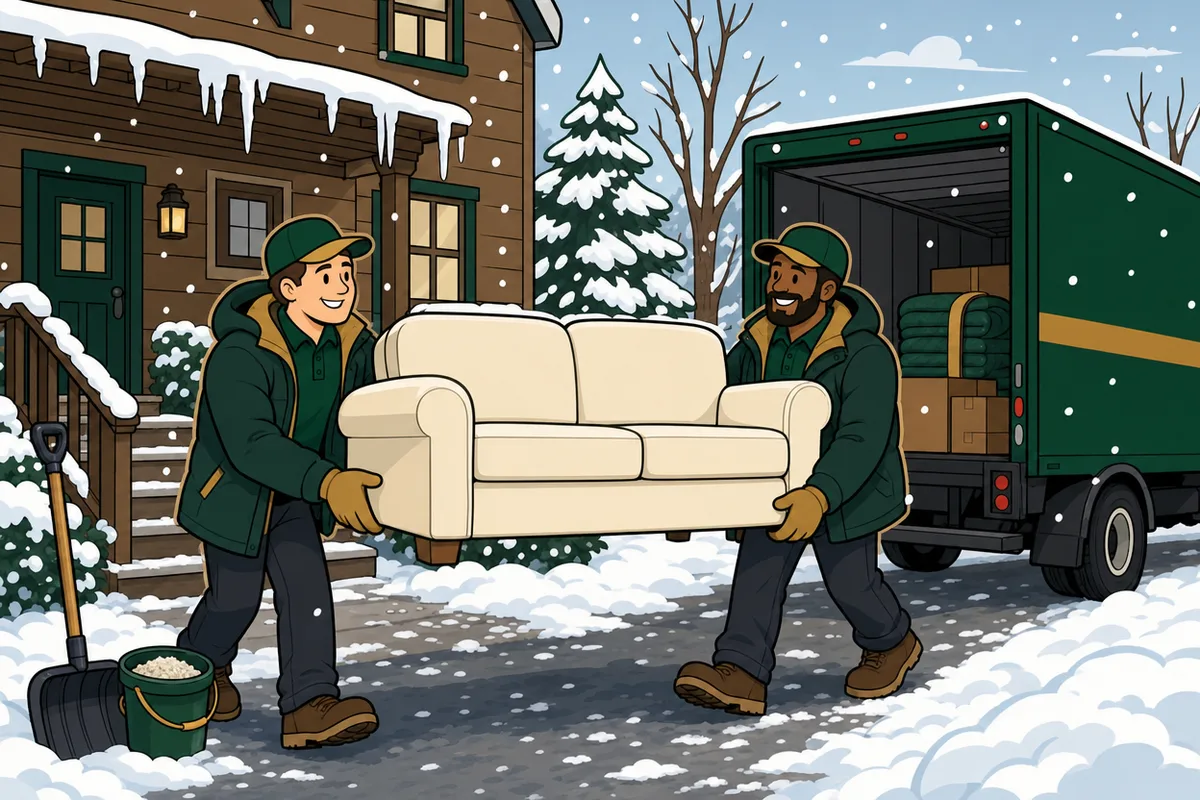
Winter moves go fine with a plan
Below zero, the move plan changes before the first box is lifted. Ice coats steps and driveways overnight, so clear a wide path and spread sand before the crew arrives.
Plan around the daylight
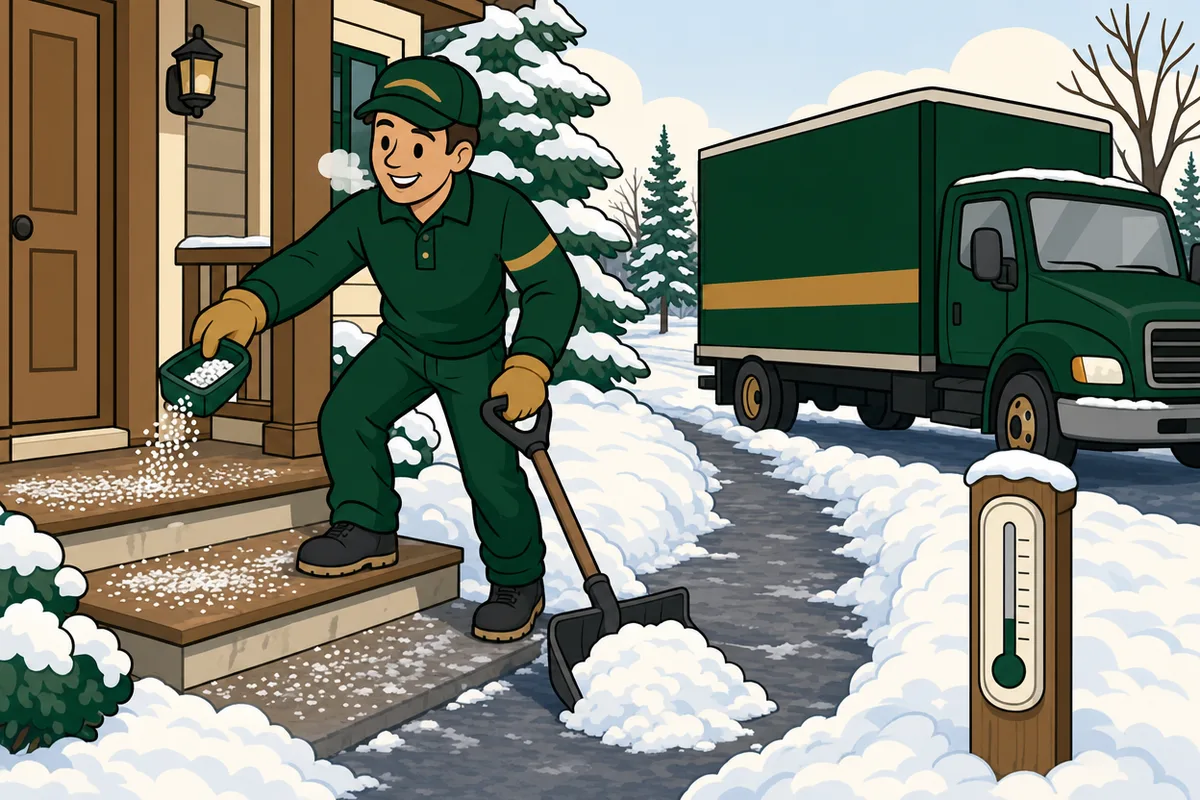
December sun sets near 4:30 in Central Wisconsin, so a morning start gives the crew daylight for the heaviest loading. If the new place has building rules that limit move-in hours, those windows matter even more when the light runs short; tell us about them when we plan the schedule.
Ice, snow, and the driveway
Snow piles narrow the path at both addresses, so walk the door-to-truck route beforehand and note where a hand truck could catch on a rut. On gravel lanes, snow packs into a hard surface or turns to mud, so check the footing where the truck will park.
- On open rural lots, drifting snow can bury a clean walk in an hour, so do a final pass with a shovel right before we start the carry.
- Plow ridges along the curb can block the truck’s back doors, so clear a spot wide enough for them to swing open. Cold air makes every extra step harder, so a close park shortens each carry and cuts the time you spend outside.
- Frozen locks stall a morning move, so test every exterior door, gate, and lock the day before. A squirt of de-icer in the morning keeps the key turning.
- Slush drips off the load as soon as it hits the doorway, so set a mat inside and clear a dry path through the house before the crew carries anything in.
If snow fell overnight, call us early with a description of the driveway, especially ice patches. A morning check tells us if the truck can park at the curb or if we need a longer carry.
Salt, slush, and your floors
Every boot sole becomes a salt and slush applicator in a Wisconsin winter. That mix scratches hardwood, stains carpet, and leaves a white crust on tile. Put mats inside every door, lay runners along the main walkway, keep a towel by the door, and roll up rugs you want protected first; the floor cleanup after the move gets much shorter.
An open front door in January pulls heat out of the house fast, so the crew keeps it closed between trips; that leaves the new place warmer for your first night there.
Belongings that dislike a cold truck
- Electronics that rode in a cold truck should sit at room temperature before you plug them in; condensation inside a cold device is the risk.
- Aerosol cans can lose pressure or burst in deep cold, so keep them in a warm spot instead of the truck.
- Water-based liquids like cleaning supplies and opened bottles can freeze and crack, so keep them with you or leave them out.
- Pianos and wood instruments get extra padding for the ride, then time to warm up slowly before anyone plays or tunes them.
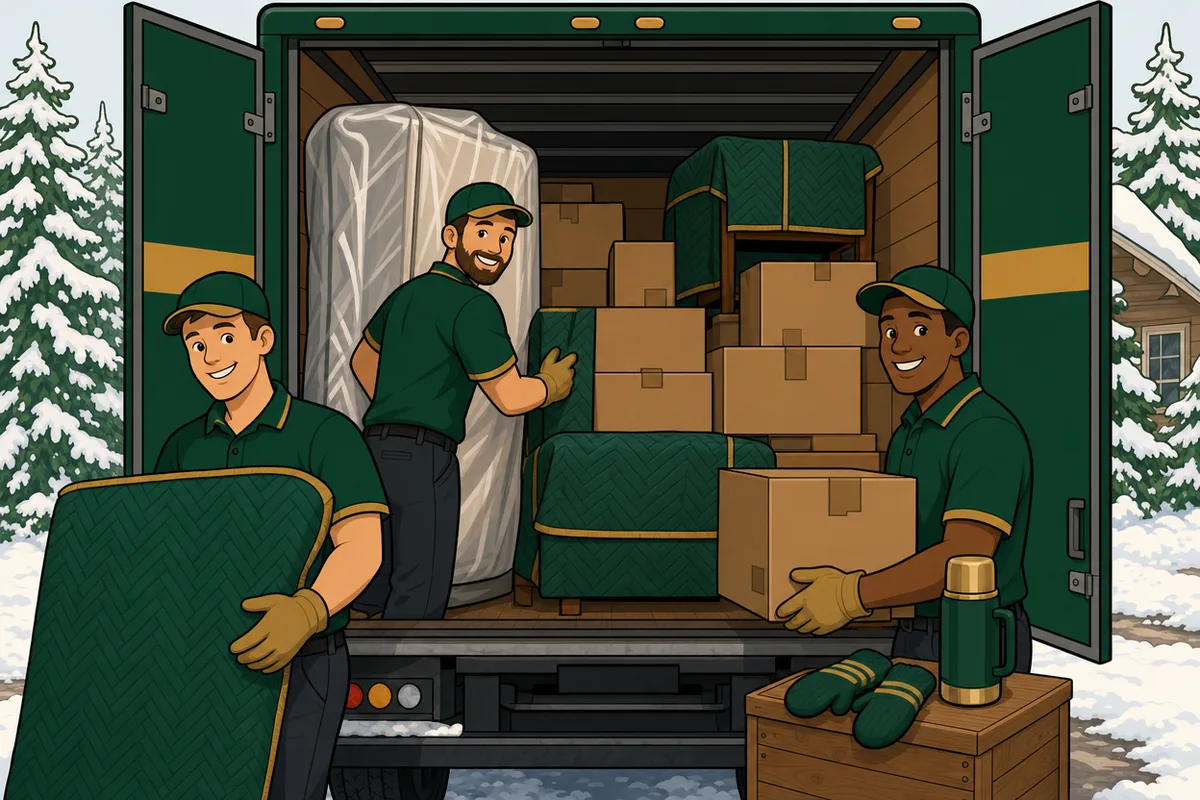
The truck stays cold below zero, so load cold-sensitive items last and unload them first; anything that cannot risk freezing rides in your car.
Reasonable timing in the coldest months
Snow and ice slow every stair trip, so the same move can take longer in January than in June. Let us know about steep drives and any deadline when you request an estimate, and the estimate will show how long the day should take.
The truck sits outside overnight, so we add warm-up time before the first stop; by the time the crew reaches your door, the truck is ready and the first carry starts.